
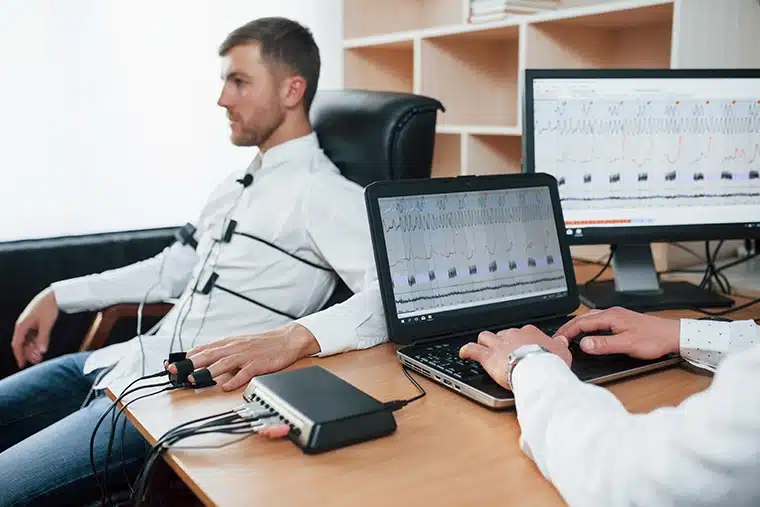
What are electrocardiograms?
Electrocardiography (ECG or EKG) records your heart’s electrical activity. It’s the most common way to check how well your heart works. The ECG procedure is simple and painless.
Your provider attaches electrodes to your chest and often other places with large arteries, such as your arms and legs. The electrodes send information about the electrical activity that makes your heart beat to a computer. Your doctor views the information on a monitor, displaying a series of wavy lines representing your heartbeat.
What do electrocardiograms show?
An electrocardiogram provides vital information about several heart functions and characteristics, including:
Your care team can manually check your pulse to measure your heart rate. However, an electrocardiogram is more precise.
ECG readings detect tachycardia (heart rate that’s too fast) or bradycardia (heart rate that’s too slow).
Electrocardiograms also highlight irregular heartbeats (arrhythmias).
Electrocardiograms identify how well blood flows through your heart. They also help your doctor determine whether your heart’s getting enough oxygen.
Electrocardiograms indicate the presence of abnormalities like heart defects and enlargements. In addition, electrocardiograms are valuable for diagnosing heart attacks and showing the damage your heart experienced during an attack. Your doctor can also tell if you’ve had a heart attack in the past.
Why would I need an electrocardiogram?
Your provider might perform an electrocardiogram if you’re experiencing symptoms of a heart problem, such as:
- Pounding or racing heart
- Irregular heartbeats
- Rapid pulse
- Chest pain
- Shortness of breath
- Dizziness or lightheadedness
- Syncope (fainting)
- Weakness
- Extreme fatigue
- Inability to exercise
Sometimes a standard electrocardiogram can’t detect what’s wrong, especially if you only have occasional symptoms or they occur at specific times. It’s unlikely that the abnormality will show up during the few minutes it takes to do a standard ECG. To overcome this problem, your provider can give you a portable electrocardiogram device. A Holter monitor records your heart’s activity constantly for a day or two. An event monitor records what your heart’s doing when you experience symptoms. A heart ultrasound (echocardiogram) or nuclear stress testing might also be necessary to diagnose some issues.
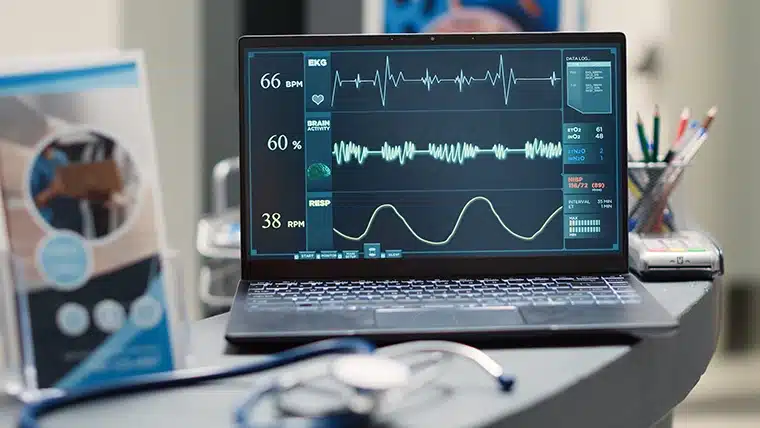
Echocardiogram
Often called a cardiac ultrasound, an echocardiogram utilizes high-frequency sound waves to produce detailed images of the beating heart. This non-invasive test evaluates the heart’s anatomy, pumping efficiency, and valvular blood flow. It is a primary diagnostic tool for identifying a wide range of congenital and acquired heart conditions.